First, take a deep breath
If you're here, your world has changed in an instant. You probably have more questions than answers, and that's very common.
Right now, take things one step at a time.
This page is here to help you navigate the first days while the doctors work to find a diagnosis with trusted information and practical resources. The first week is broken down in the following section to give a better explaination of why the process is done a certain way.
Remember, you are not alone.
The First 24 Hours
Bring a notebook or your phone to keep a list of questions. It is also helpful to write the plan your team gives you each day.
The pediatric oncology team will be consulted. They will suggest different tests to help confirm a cancer diagnosis. If cancer is confirmed, the oncology team will meet with you to come up with a treatment plan
Lean on family, and friends. Encourage visitors per your hospitals policy. If having others arround feels too overwhelming, thats ok too. Remember your care team is here to support you.
Recognize that this is overwhelming, and that’s okay. Take it one day at a time.
You are not alone.

The First Week
The first week can be difficult because you may not have all of the answers right away. Multiple tests are done to confirm a cancer diagnosis and help your care team come up with the best treatment plan for you/your child. There are so many emotions because everyone is working to explain what is wrong. It’s scary, overwhelming, upsetting, all of these feelings are valid. Rest assured, your team is working very hard to make sure they come up with the best plan of action. Below is a timeline of what the first week can look like, the days might be longer or shorter depending on the tests needed.
Days 1-3
A pediatric oncologist will be consulted when a cancer diagnosis is suspected. The oncologist will recommend different tests and procedures to help confirm a diagnosis. These tests can include but are not limited to; a biopsy, imaging like CT scans or MRIs, and blood tests.
Days 2-4
Once the diagnosis of cancer is confirmed your child will go for a surgery to get a central line placed. Central lines are a key component in administering medications, drawing blood, and providing hydration throughout treatment. While your child is in surgery, the oncologist may also do a lumbar puncture or bone marrow biopsy. A member of your care team will explain all the procedures and what to expect next.
Day 4 and going forward
Now that we have a diagnosis and a central line, it’s time for treatment. The most common type of treatment is chemotherapy; an IV medication that attacks the cancer cells. Depending on the type of cancer treatment might include but is not limited to radiation, surgery, and chemotherapy. Your care team will review in detail the treatment plan for you/your child.
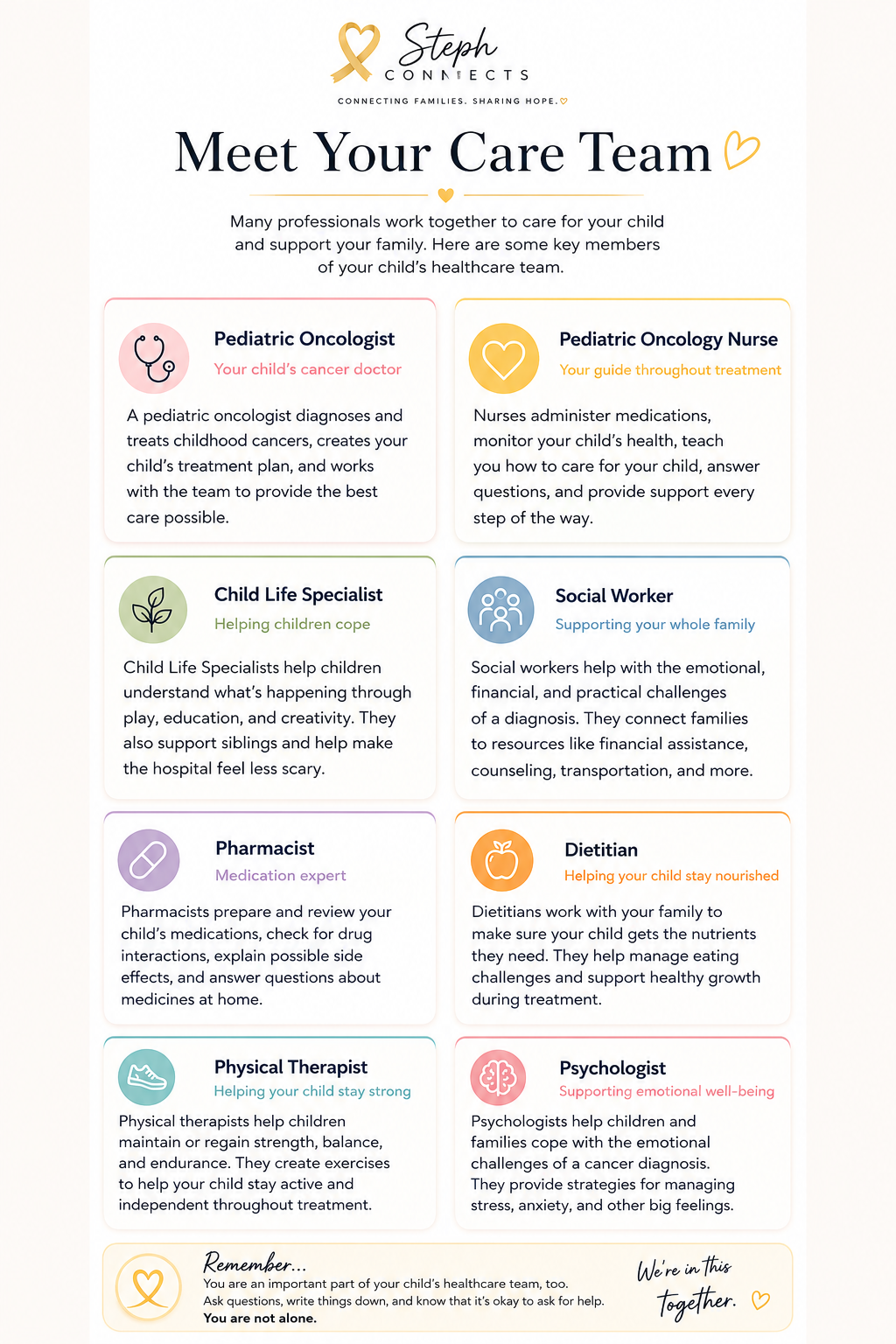
Let’s meet the team!
You will meet many people along this journey, let’s learn about who they are and how they help.