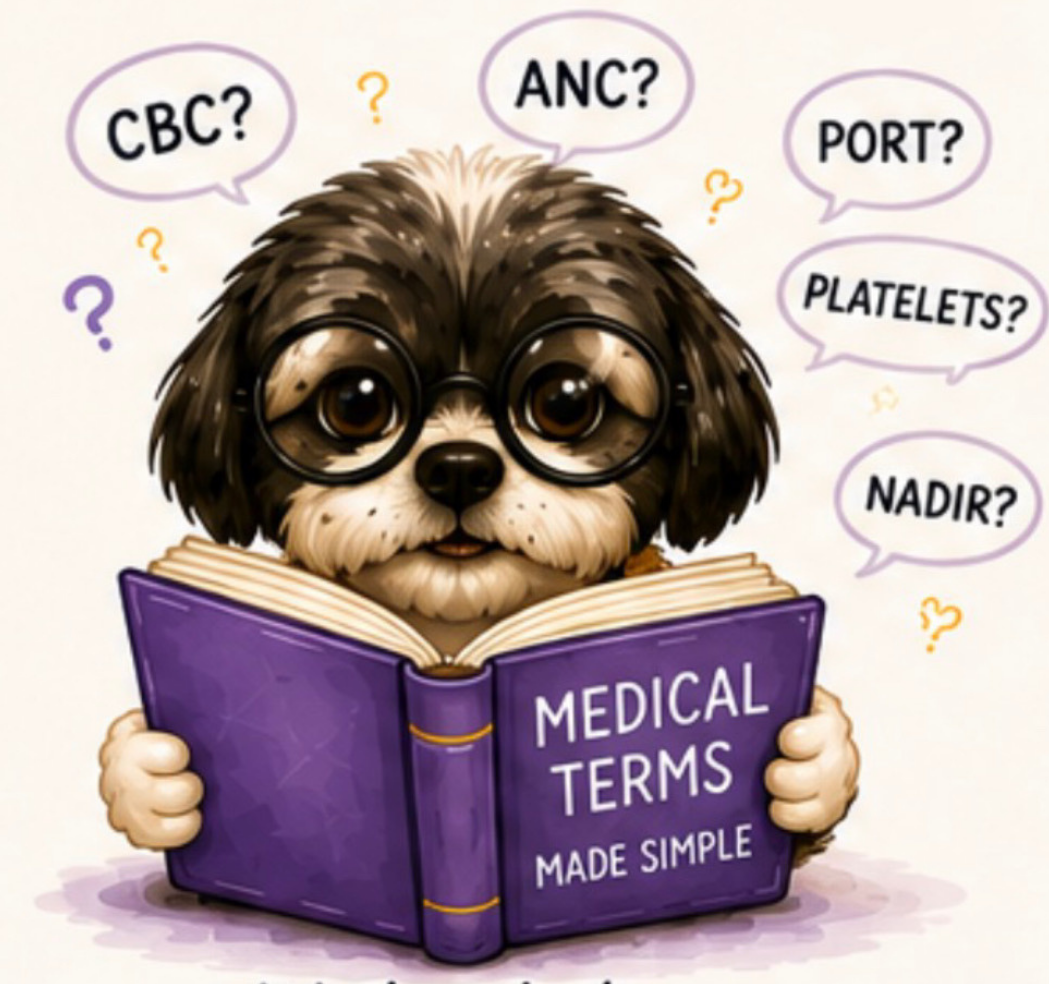
If you feel like Harley, don’t worry! You’re in the right section. Learning medical terms can be overwhelming along with everything else going on. Below is a glossary of common terms you will hear throughout treatment.
Common Cancer Terms 📚🎗️
🩸 Blood Counts
🩸 CBC (Complete Blood Count)
A blood test that measures your child's red and white blood cells, hemoglobin, and platelets. It helps your care team monitor how your child's body is responding to treatment. It can also help determine if a blood or platelet transfusion is needed.
🛡️ ANC (Absolute Neutrophil Count)
A measure of the white blood cells that help fight infection. Think of it as a way to see how strong your immune system, is. Low ANC means your child has a higher risk of getting sick.
🤍 White Blood Cells (WBC)
White blood cells help your body fight infections. Chemotherapy can lower these cells, it is very common for this number to drop during treatment.
❤️ Red Blood Cells (RBC)
Red blood cells carry oxygen throughout the body.
❤️ Hemoglobin
Hemoglobin is the part of red blood cells that carries oxygen throughout the body. Low hemoglobin can make your child feel tired, dizzy, or short of breath. This is treated with a blood transfusion.
🩹 Platelets
Platelets help your blood clot to stop bleeding. Low platelets can cause easy bruising, nosebleeds, or bleeding gums. This is treated with a platelet transfusion.
📉 Counts
"Counts" refers to your child's blood counts, including white blood cells, red blood cells, and platelets.
📉 Nadir
The time when blood counts are at their lowest after chemotherapy. This is when your child can be most at risk for infection or bleeding.
💉 Lines & Procedures
🧪 Biopsy
A procedure that removes a small tissue sample to be examined under a microscope to help diagnose cancer or other conditions.
💧 IV (Intravenous Line)
A small catheter is placed into a vein to give medications, fluids, blood products, or nutrition.
🩸 Blood Transfusion
A treatment where donated blood or blood products are given to replace low red blood cells or platelets.
🩺 Infusion
The process of giving medications, fluids, blood products, or chemotherapy through an IV or central line.
💊 Treatments
🎗️ Chemotherapy (aka Chemo)
Medicines used to destroy cancer cells or stop them from growing. Chemotherapy can also affect healthy cells, which is why side effects can happen.
💊 Intrathecal Chemotherapy (aka IT chemo)
Chemotherapy that is given into the spinal fluid during a lumbar puncture to help treat or prevent cancer in the brain and spinal cord.
🧬 Immunotherapy
A treatment that helps the body's immune system recognize and attack cancer cells.
☢️ Radiation Therapy
A treatment that uses high-energy rays to destroy cancer cells or shrink tumors.
🩺 Stem Cell (Bone Marrow) Transplant
A procedure that replaces damaged bone marrow with healthy stem cells after intensive treatment.
🌡️ Symptoms & Side Effects
🦠 Neutropenia
Neutropenia means your child has a low number of neutrophils, a type of white blood cell that fights infection.
🌡️ Febrile Neutropenia
A fever that occurs while your child has a low ANC. This is a medical emergency, follow your care team's instructions immediately if your child develops a fever.
🤢 Mucositis
Painful sores or swelling in the mouth and digestive tract that can occur as a side effect of chemotherapy.
🤮 Nausea
The feeling that you might vomit. Many cancer treatments can cause nausea, but medications can often help.
💦 Hydration
Making sure your child gets enough fluids to support their body during treatment and help protect their kidneys.
🏥 Hospital Terms
🏥 Inpatient
Staying overnight in the hospital to receive treatment or monitoring.
🚗 Outpatient
Receiving treatment or appointments at the hospital or clinic without staying overnight.
❤️ Care & Support
🎉 Remission
Remission means there are no signs of cancer that doctors can detect. It is still very important to keep up with routine appointments during this time.
🔄 Relapse
This means the cancer has returned after treatment. If this happens, your child's healthcare team will discuss the next treatment options with you.
❤️ Palliative Care
Specialized care that focuses on relieving symptoms, managing pain, and improving quality of life at any stage of illness. It can be provided alongside cancer treatment.
🌈 Hospice
Care focused on comfort, quality of life, and support for children and families when treatment is no longer expected to cure the illness.